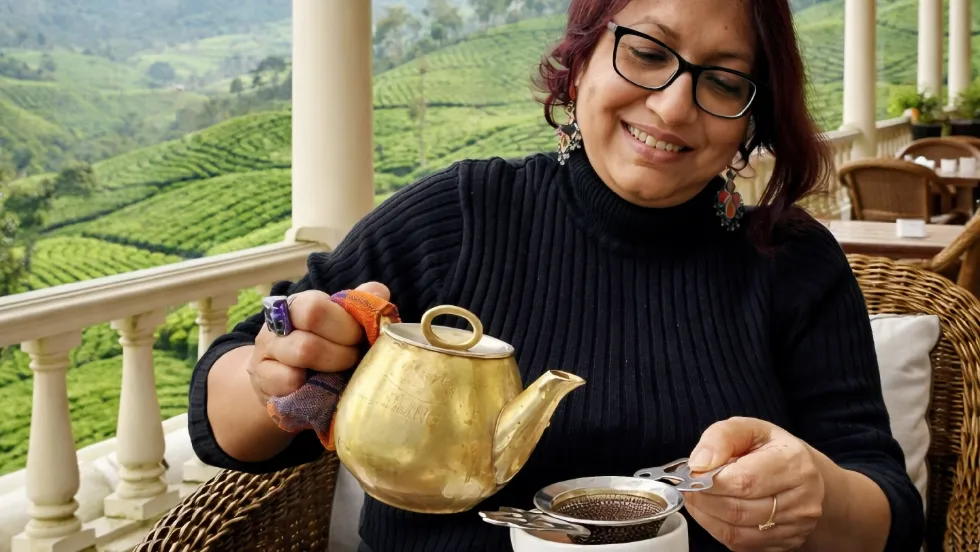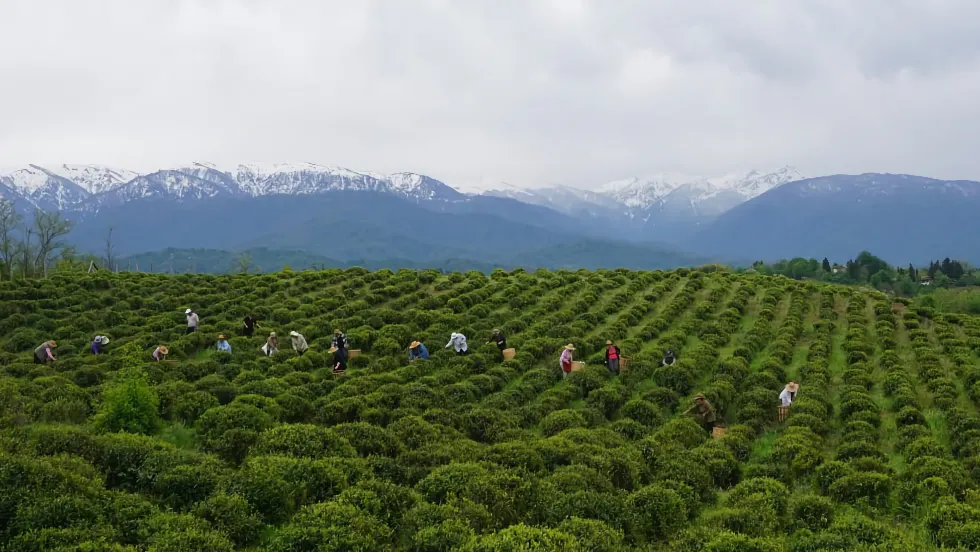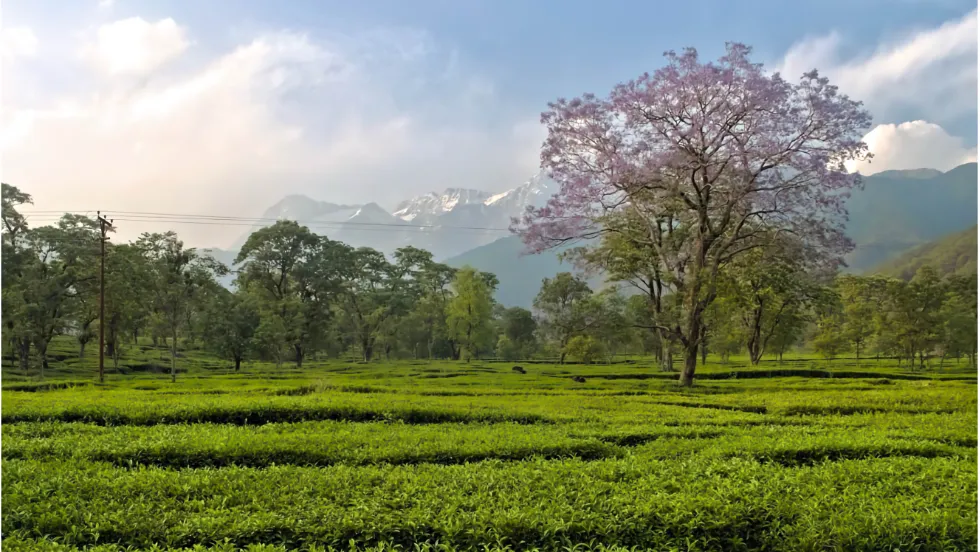
How do you introduce a niche tea origin to international buyers? Pranjal Lakhanpal shares how Vanamrit is bringing teas from India’s Western Himalayas to new markets, connecting their regional identity with what buyers need to know.
T Hospitality: How did your personal relationship with tea begin, and what led you to establish Vanamrit?
Pranjal Lakhanpal: My relationship with tea began long before Vanamrit existed as a business. Tea has always been part of everyday Indian life, but for me, its deeper meaning developed through my connection with the Himalayas and my own journey. I come from a civil engineering and construction background. I spent years working on roads, buildings and large infrastructure projects in India, and later moved to Canada, where I worked in the renewable-energy sector and experienced a completely different professional environment. Living in Calgary and travelling through Canada also made me appreciate how people outside India approach tea differently. For many consumers, tea is not simply a beverage. It is an experience, a ritual and, increasingly, a product of provenance. That made me look at Himalayan tea differently.
I wanted to create something that could take the story of the Western Himalayas to the world without compromising its identity. That became Vanamrit, meaning the “elixir of the forest.” The idea was never to become just another tea supplier. We are a manufacturer focused on producing premium Western Himalayan teas and presenting their origin, craftsmanship and character properly. Vanamrit is therefore much more personal to me than a commercial brand. It represents a journey from engineering and construction to building something rooted in nature, heritage and Indian origin.
Why did you choose to focus on Himalayan tea? What does this origin mean to you personally?
The Himalayas are not simply a geographical location to me. They represent where some of India’s most distinctive natural products come from. I’m proud to be born and raised in the Himalayas. The Western Himalayan region has a combination of altitude, climate, soil, rainfall and seasonal variation that creates teas with a very different personality. Our focus is particularly on premium first-flush tea, harvested during the April-May period when the young leaves and buds are at their most delicate. For me, Himalayan tea is about provenance.
Today, consumers can find thousands of teas from around the world. What makes a premium tea meaningful is knowing where it comes from, how it was produced and why that particular origin matters. Our teas come from a geographically recognized Himalayan origin, and the GI protection associated with the region provides an important layer of authenticity and traceability. We want international buyers to understand that this is not simply tea carrying a Himalayan-inspired name. It is tea connected to a genuine geographical origin and its heritage.
Which Himalayan regions does your tea come from, and what makes their teas different in terms of flavor, aroma and growing conditions?
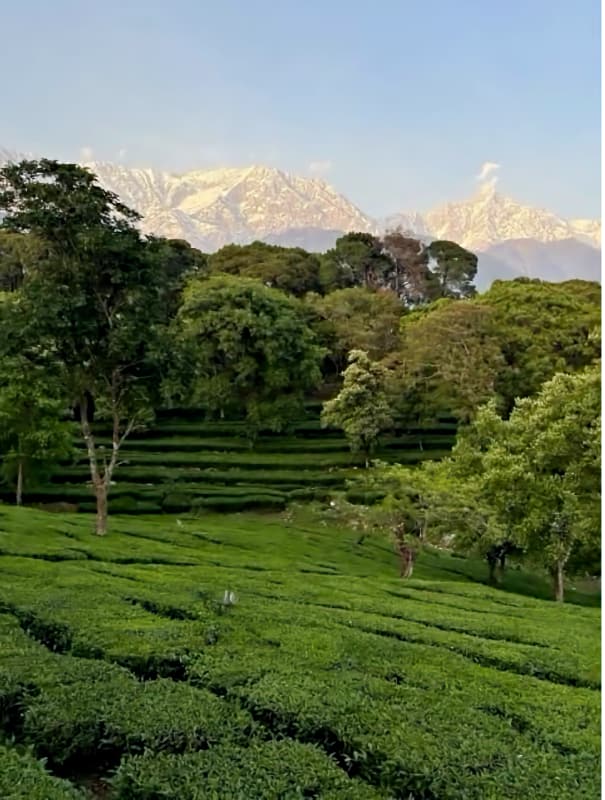
Our teas come from Kangra, the Western Himalayan tea-growing region of Himachal Pradesh, particularly the traditional tea-growing belt associated with the region’s EU GI-protected tea heritage. The character of Himalayan tea comes from the interaction of altitude, mountain climate, soil, rainfall and seasonal conditions. First-flush production is especially interesting because the plants produce tender new growth after the winter period. Our premium first flushes tend to have a more delicate character, clean aroma and fresh, refined flavor profile compared with heavier, more robust teas.
We also work with different botanical and aromatic expressions, including some matchless offerings. However, the philosophy remains the same: the origin should remain meaningful, and the added botanicals or flavor profiles should complement rather than hide the character of the tea.
When were the plantations you work with established? Can you tell us about the history of tea cultivation in these areas?
Tea cultivation in Himachal Pradesh has a long history dating back to the nineteenth century, and the region developed a distinctive tea culture that continues today. What interests me most is that Himalayan tea has never been about mass production in the way some of the world’s major tea-growing regions have become. Its identity is closely connected with smaller growing areas, traditional cultivation and the particular mountain environment. That history is important to Vanamrit because we are not trying to manufacture an artificial story around the tea. We want to preserve and communicate a story that already exists.
Our role is to take that heritage, combine it with modern manufacturing, quality control and international standards, and present it to consumers and hospitality buyers around the world.
How do you select your teas and the growers you work with? Do you manage any production directly, or source from independent producers?
This is an important distinction for us. We are manufacturers, not simply suppliers or traders. Our involvement goes beyond purchasing finished tea and putting a label on it. We work closely with our production network, select appropriate tea material, develop our products, manage processing and blending requirements, and maintain quality-control standards before the product reaches the customer.
We are extremely selective about the raw material, particularly for our premium first-flush teas. We also believe that quality cannot be judged simply by looking at a dry leaf. Aroma, liquor, appearance, moisture, consistency, cleanliness, processing and the final cup all matter.
How well known are these Himalayan tea origins internationally? Do buyers recognize the individual regions, or do you first need to introduce their history and characteristics?
There is still a great deal of education required internationally. Some experienced tea buyers immediately understand the significance of Himalayan origin and its GI protection. Others know Indian tea primarily through better-known names and need to learn about the Western Himalayan story. That is actually one of the most exciting parts of what we are doing. We don’t want to sell tea simply by saying, “This is premium.” We want buyers to understand why it is premium: the origin, the harvest, the geographical conditions, the processing and the traceability.
Our international customers are increasingly interested in provenance. They want to know where their tea comes from, how it was produced and whether the claims made about it can be documented. That is why European Union GI protection and proper documentation matter so much to us.
What are the main challenges in producing or sourcing your teas, particularly in maintaining quality, consistency and reliable supply?
Premium tea is agricultural, so nature always has the final word. Weather, rainfall, temperature, harvest timing and seasonal conditions can all influence the crop. First-flush tea is particularly delicate because timing matters enormously. There is also a fundamental challenge in scaling a premium product. If you chase volume, you can very quickly compromise the characteristics that made the tea special in the first place.
We have deliberately chosen a different path. We focus on quality, not quantity. I would rather tell a customer that a particular first-flush lot is limited than compromise the standard simply to fulfil a larger order. For us, consistency does not mean making every harvest identical. It means maintaining a defined quality standard and being transparent about the natural characteristics of each harvest.
How has the market responded to Vanamrit so far? Which teas have attracted the most interest, and has anything surprised you about customer preferences?
The response has been encouraging, particularly from buyers looking for something beyond conventional commodity tea. Our premium first-flush green teas have naturally attracted strong interest because of its origin and delicate character. At the same time, our black tea expressions have generated interest from buyers looking for distinctive specialty-tea programs. Imperial oolong tea & smoke tea have been performing outstandingly in the European markets. White teas are loved across North America and are being served as an elixir adding recognition to our legacy. What has surprised me most is how strongly people respond to the story behind the product.
What are your main markets today, and which countries would you like to enter next?
We are already building an international customer base. Our tea has been shipped to Banff, Vancouver and Toronto in Canada; California and New York in the United States; Sydney in Australia; Vienna in Austria; London in the United Kingdom; and Lyon in France.
Canada is particularly meaningful to me because I personally lived and worked there. I studied Project Management at SAIT in Calgary and later worked in Canada’s renewable- energy sector. That experience gave me a first-hand understanding of the Canadian market and helped me build relationships there. Today, our ambition is to continue expanding across North America, Europe, the Gulf and selected Asia-Pacific markets.
The Gulf is particularly interesting because of its extraordinary hospitality culture and appreciation for premium products. Dubai, in particular, has an audience that understands luxury, provenance and presentation. But our expansion will remain selective. We are not trying to put Vanamrit everywhere. We want it in the right places.
Do you currently supply hotels, restaurants or cafés? Which of your teas would you introduce to hospitality buyers, and how would you suggest serving them?
Yes. We supply the HORECA sector, including luxury hotels, restaurants and cafés/cafeterias, where our teas are used as part of the guest experience, particularly for VIP guests and discerning customers. Our approach to HORECA is intentionally different from conventional retail. We supply our teas as premium loose-leaf raw material, allowing each property to create its own presentation, service ritual and menu around the tea. For a luxury hotel, for example, our Premium First-Flush Western Himalayan Green Tea is not simply another beverage on the menu. It can become part of the property’s luxury offering. The tea can be presented loose, brewed carefully in front of the guest, and accompanied by the story of its Himalayan origin, first-flush harvest and EU GI-protected geographical heritage. That sense of provenance is important in luxury hospitality
I would recommend our teas to be served without excessive additions. Good first-flush tea does not need to be complicated. For a luxury hotel, I also see an opportunity to create a Himalayan tea ritual: premium presentation, the story of the origin, the harvest information and a carefully controlled brewing process. The guest should not simply receive a cup of green tea. They should receive a small experience from the Himalayas.
Finally, if you could share one of your teas with our readers, which would you choose, and why?
I would choose our Pinewood Smoke Tea, a distinctive blended smoke tea. It is perhaps one of the best examples of how we approach tea at Vanamrit. It is not created to follow a conventional formula or to compete with mass-market teas. It is designed for people who are curious, adventurous and appreciate craftsmanship, character and a memorable sensory experience. The pinewood smoking process gives the tea a distinctive smoky character and aroma, while the underlying tea provides the structure and depth. It is a tea that immediately creates a sense of place. There is something very evocative about the aroma of pinewood smoke. It brings to mind mountain forests, wood, fire and the Himalayan landscape. For me, that is what premium tea should do. It should take you somewhere.