Georgia’s relationship with tea began long before the country became a producer. Historical evidence suggests that tea was already known among Georgian ruling circles and noble families by the seventeenth century, most likely reaching the country through the commercial and cultural exchanges that connected Georgia with China, India, Persia and the wider Silk Road.
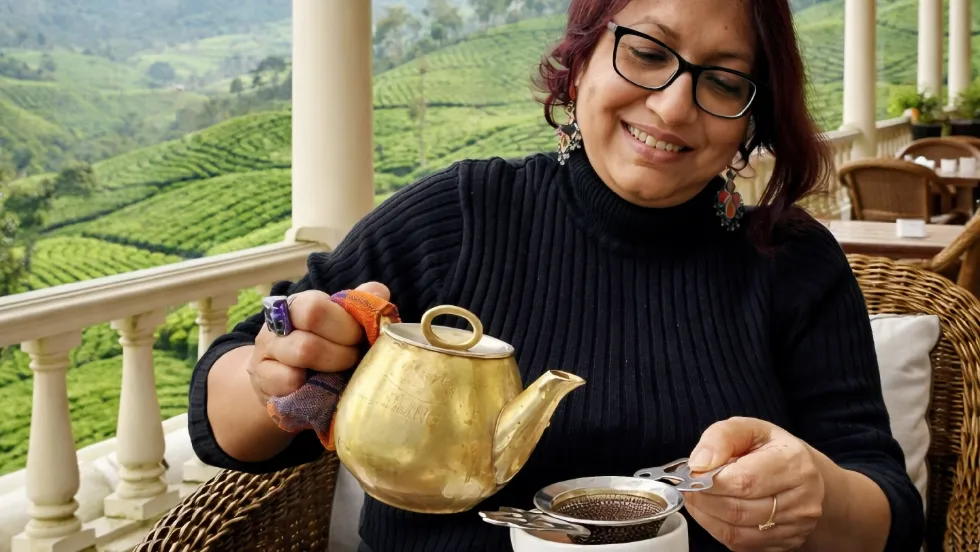
Some of the earliest tangible evidence comes not from descriptions of the drink itself, but from the objects used to prepare it. Inventories dating from the beginning of the eighteenth century record teapots among the possessions of Georgian noble families. The Georgian term chaidani, used for a vessel associated with tea preparation, had also entered the language, suggesting that tea consumption was sufficiently established to develop its own vocabulary.
By the eighteenth century, tea was no longer simply an exotic product encountered abroad. Craftsmen in Tbilisi were producing specialised teapots and coffee pots, indicating the existence of a local market for both beverages. Inventories from the Georgian royal court and noble households mention tea cups, strainers, teaspoons, silver and copper teapots and boxes specifically intended for storing tea.
The tea itself came from considerable distances. Georgian documents from the late eighteenth century refer repeatedly to Chai Khataia—tea from Khataeti, the historical Georgian name associated with China. Other inventories mention tea boxes brought from India. Later, as relations with Russia intensified, another route for tea into Georgia developed through the north.
In the 1820s tea houses had opened in Tbilisi. Yet drinking tea and growing it were two very different chapters of the Georgian story.
The first tea bushes were introduced in 1847, when Mikhail Vorontsov planted seedlings at the Anaseuli acclimatisation plot to determine whether tea could adapt to Georgian conditions. The decisive move towards commercial cultivation came several decades later. In 1893, Alexander Popov established plantations in Chakvi with the assistance of the Chinese tea specialist Lao Jin Zhao, together with a factory for processing the leaves.
The results attracted international attention remarkably quickly. In 1900, Georgian tea produced by Popov received the Grand Gold Medal and Grand Prix at the Paris International Exhibition. Georgia had moved within little more than half a century from experimenting with imported tea bushes to producing tea capable of competing internationally.
During the twentieth century, cultivation expanded on a completely different scale. Tea became an important agricultural industry, accompanied by research, mechanisation and the development of processing infrastructure. In 1963, the first tea-picking machine was invented in Georgia, and by the 1980s the country had become the world’s fourth-largest tea producer.
Then came an extraordinary reversal. The political and economic disruption of the 1990s devastated the industry. Plantations were abandoned, factories closed and a tea sector built over almost a century largely disappeared. For a country that had become one of the world’s major producers, the decline was dramatic.
The next chapter began in 2015, when government-supported rehabilitation efforts started bringing abandoned plantations back into production. But today’s Georgian tea industry is emerging in a very different global market from the one it left behind.
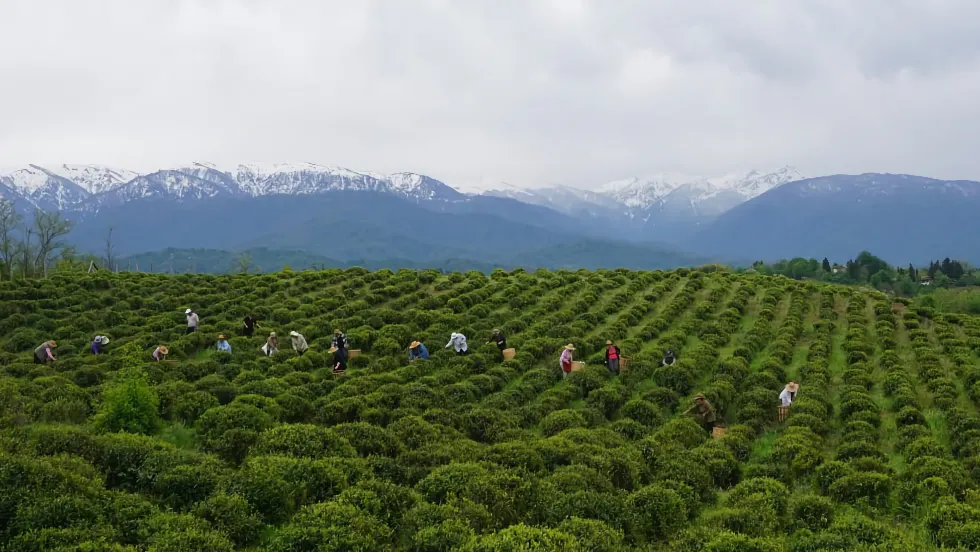
This is what makes Georgia particularly interesting today. Its tea story is not simply one of restoring production volumes. A new generation of growers and tea makers is working with plantations that in some cases have been left untouched for decades, while producers are exploring black, green, white and other specialty teas and reconsidering what Georgian origin can represent internationally. Alongside them are researchers, entrepreneurs and industry organisations attempting to rebuild the infrastructure and commercial networks that a viable tea sector requires.
Georgian Tea Today: Rebuilding an Industry, Reclaiming an Identity
To gain a clear and up-to-date understanding of the current status of Georgia’s tea sector and its latest developments, T Hospitality had the opportunity to hear from some of the country’s most remarkable tea growers, whose experiences provide a first-hand perspective on the revival of Georgian tea.
Their views are complemented by those of the President and Executive Director of the Georgian Tea Producers Association, offering a broader perspective on the industry, its challenges, export potential and future direction, and by the Head of the Institute of Tea at the Agricultural University of Georgia, who contributes the scientific and agronomic perspective behind the sector’s development.
The report was compiled by Mr. Basarion Zalikiani, founder of Tea-Country and one of the foremost experts on Georgian tea, whose knowledge of the sector provides an important link between its agricultural heritage and its current revival.
A tea shaped by Georgia itself
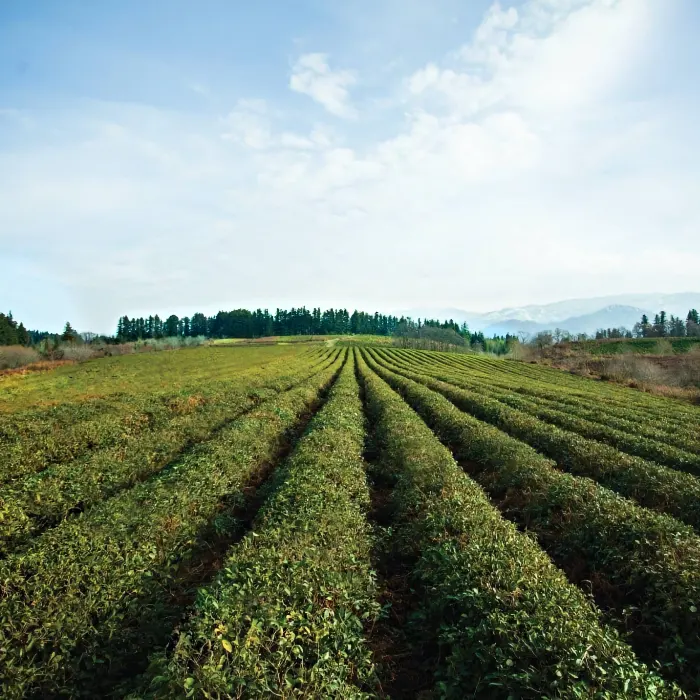
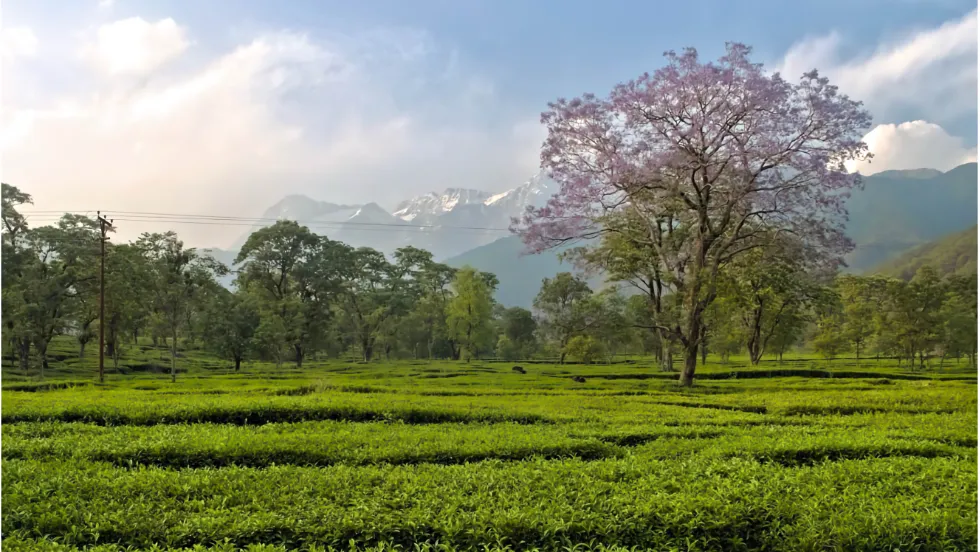
The character of Georgian tea begins with its geography. Western Georgia combines a humid subtropical climate, annual rainfall of around 2,000–2,500 mm, acidic soils and comparatively mild winters. Chinese tea varieties introduced into the country were progressively selected to withstand colder conditions, contributing, according to Zalikiani, to teas with relatively low caffeine and tannin levels and a pronounced aromatic character.
Georgia’s northern position within the tea-growing world also has an important effect. Cooler temperatures and shorter growing days slow leaf development, while the marked seasonality differentiates Georgian tea from tropical origins where harvesting may continue throughout the year.
A particularly unusual element of contemporary Georgian tea is the survival of old plants. Some bushes trace their origins to nineteenth- and twentieth-century plantings, while abandoned plantations have in places grown naturally for decades. Historical cultivars including Georgian 1, Georgian 2 and Colkhuri remain present, alongside old bushes now being used for organic and so-called wild teas.
For Zalikiani, these abandoned plants are not simply remnants of another era. Their maturity, deep root systems and genetic character can become an advantage in today’s market, particularly for small-scale specialty production. Restoring them can also be considerably faster than establishing new plantations from scratch.
From industrial scale to smaller, more distinctive production
The scale of Georgian tea during the Soviet period is difficult to compare with the industry today. In the 1980s, approximately 65,000 hectares were devoted to tea and around 150,000 tons of finished tea were produced. Georgia became the principal supplier of tea to the USSR. That extraordinary scale, however, came with a shift towards high-yield cultivars, mechanised harvesting and processing designed primarily around volume.
Today, the picture is almost the reverse.
Georgia produced only 2.2 thousand tons of tea leaf in 2025, according to the figures provided for this report. Between 2016 and 2024, approximately 1.67 million dollars of public funding was used to rehabilitate 2,057 hectares, while sector representatives estimate that around another 5,000 hectares could potentially be brought back into cultivation.
This enormous difference in scale raises a fundamental question for Georgian tea: should the objective be to recreate a high-volume industry, or to build a smaller sector around value, origin and quality?
Much of what is happening today suggests the second model may offer the more distinctive opportunity.
Black and green remain important, but the range is expanding
Black tea historically dominated Georgian production, with green tea representing a smaller share. Both remain central today, but producers are increasingly experimenting with other styles. Oolong, white, yellow and dark teas are now also being produced.
For smaller growers, this diversification provides an opportunity to move beyond the historical association of Georgian tea with industrial black tea.
The highest-value products already tend to share several characteristics: leaves harvested by hand from older bushes, small-batch production, near-organic growing conditions and a clear farm or regional identity. Limited-production white and specialty teas can command significantly higher prices, although their restricted volumes make consistency an important challenge.
What does Georgian tea taste like?
Zalikiani describes Georgian black tea in distinctly gentle terms:
“Look for a soft, floral sweetness in the cup: with aromas of honey and rose.”
He attributes its character partly to relatively low caffeine and tannin levels, which can result in less bitterness and a cleaner, softer cup, with honeyed and floral notes.
That profile could become an important part of the international identity of Georgian tea. In a global market where many consumers are learning to differentiate tea by origin in much the same way they differentiate wine or coffee, flavour needs to become part of the story.
Rehabilitation remains the central agricultural challenge
The collapse of the Soviet system left large areas of tea land abandoned. Bringing them back into production is far more complex than simply pruning old bushes.
Land ownership can be fragmented; decades of uncontrolled vegetation have to be removed without damaging surviving plants; and processing facilities are not always located close enough to rehabilitated fields.
There is also an important economic issue. Rehabilitation can create productive plantations, but without a reliable chain connecting growers to buyers and processors, the restored areas themselves can once again become unsustainable. This is one reason why the current revival has to involve not only agriculture, but processing, marketing, distribution and export.
Government support is moving beyond the plantation
Government involvement has been instrumental in restoring production. According to Zalikiani, the Ministry of Agriculture has supported the rehabilitation of up to approximately 2,500 hectares since 2015, alongside the establishment and renovation of tea enterprises. New technical regulations for Georgian tea have also been approved.

The strategy is gradually broadening beyond production.
The Ministry of Culture and the Tourism Administration are supporting the development of a Tea Cultural Route, currently a candidate for the Council of Europe Cultural Routes Programme. Georgian tea is also being incorporated into tourism information and international promotional activity.
Another significant change concerns international exhibitions. Instead of individual producers appearing independently, the sector is exploring models whereby a trader or manufacturer can represent products from several Georgian companies together. Zalikiani points to his own experience presenting a collective Georgian offer in Dubai as evidence that cooperation is possible when producers share a commercial objective.
He argues that the next phase of government support should increasingly address marketing and exports, not only plantation rehabilitation.
Tea in Georgian daily life
Georgia does not have an elaborate tea ceremony comparable with China or Japan. Tea is instead closely connected with everyday hospitality.
It is often brewed strongly and left to steep for an extended period. Jam or preserves may be served alongside it, allowing the drinker to alternate between tea and something sweet rather than adding sugar directly to the cup.
A specifically Georgian brewing method has also been developed using controlled extraction in a decanter and was presented internationally at the Tea Masters Cup in Seoul in 2016.
Domestic consumption nevertheless remains comparatively low. FAO research cited in the report estimated Georgian tea consumption at approximately 400 grams per person in 2021, significantly below neighbouring Turkey and Azerbaijan.
There is, however, an important generational change underway. Imported tea had for years enjoyed a stronger reputation among Georgian consumers, while locally produced tea carried associations with lower-quality Soviet-era production. Zalikiani believes that perception is now changing, particularly among younger Georgians.
Where Georgian tea goes today
ICT’s Trade Map statistics provide an interesting picture of Georgian tea exports in 2025. Total exports reached 1,239 tons, worth approximately US$1.767 million, implying an average export price of around US$1.43 per kg.
Export figures reveal two very different export businesses.
Kazakhstan and Mongolia alone absorbed 936 tons, or roughly three quarters of the total export volume, but at average prices below US$1 per kg. At the opposite end of the market, very small quantities shipped to France, Chinese Taipei, the Czechia, Germany and Estonia achieved dramatically higher unit values between 10 and 20 dollars per kilo.
The volumes involved are too small to draw broad conclusions about entire markets, but they demonstrate something important: Georgian tea is already capable of operating in both a commodity-oriented market and a much higher-value specialty segment. This is potentially one of the most important indicators of the direction available to the industry.
Beyond traditional export markets
Regional markets remain the foundation of Georgian exports. Kazakhstan, Russia, other CIS countries and parts of the Middle East are among the established destinations.
For the future, however, Zalikiani sees opportunities in Western Europe, the Gulf, North America and East Asia, particularly for specialty and single-origin teas. These are precisely the markets where Georgian tea’s relative unfamiliarity could become an advantage. Buyers and consumers increasingly look for origins with a genuine story, limited production and a strong connection between product and place. Georgia has all three.
Hospitality and tea tourism could become part of the route to market
For Georgian producers, hospitality presents an opportunity that goes beyond selling tea bags or loose leaf. Hotels and cafés connected with tourism are already being incorporated into the Tea Cultural Route. Producers are beginning to offer tea tastings, wholesale products and experiences linked directly to destinations and plantations.
A hotel serving Georgian tea close to where it was grown has an opportunity to explain the plantation, cultivar, producer and history behind the cup. International hotels can perform a similar role by introducing an origin that many guests have never encountered.
For a relatively small tea-producing country, this may be more effective than trying to compete solely on volume.
The challenge is not only production. It is identity.
When asked what Georgian tea needs most—production capacity, quality standards, branding, distribution, tea tourism or education—Zalikiani’s answer was straightforward:
“Honestly, all of the above.”
But he places one issue ahead of the others: coordination around consistent quality and a recognisable national identity.
As he explains, production and distribution can eventually be addressed with investment, whereas establishing what “Georgian tea” means in the mind of an international buyer takes much longer.
The first national tea marketing strategy was prepared in 2021 with support from TBC Bank and the Agrarian University, and some of its ideas are now beginning to move into implementation. New technical regulations are intended to provide a stronger framework for defining and protecting Georgian tea.
The next Georgian tea story
Old plantations, unusual northern growing conditions, distinctive cultivars, small producers, specialty processing, tea tourism and dramatically different export price points all suggest that Georgian tea could build a position based increasingly on origin and value rather than volume alone.
Zalikiani’s vision brings several of these elements together. He wants Georgia to develop an international Tea Cultural Route linked conceptually with the Silk Road and ultimately become a full member of the Council of Europe’s Cultural Routes Programme.
But the ambition also extends beyond tourism. As he puts it, the objective is that just as someone anywhere in the world can already book a Georgian tea tour online, eventually they should also be able to order Georgian tea directly and reliably from wherever they live.
The long-term goal is therefore not simply to sell more tea. It is to create a global community of people who recognise Georgian tea, seek it out and ultimately travel to Georgia to discover the landscapes and people behind it.
For an industry that has already experienced expansion, collapse and revival, that may represent a very different—and potentially much more sustainable—definition of growth.