For visitors arriving from Europe or the Middle East, Singapore’s teahouses open the door to a culture of tea appreciation still rarely encountered outside Asia. Tea Time shows that authenticity is not defined by age: a place does not need decades of history to feel genuine.
In Singapore’s Chinatown, where restaurants and souvenir shops compete for the attention of passing visitors, Tea Time offers a quieter proposition.
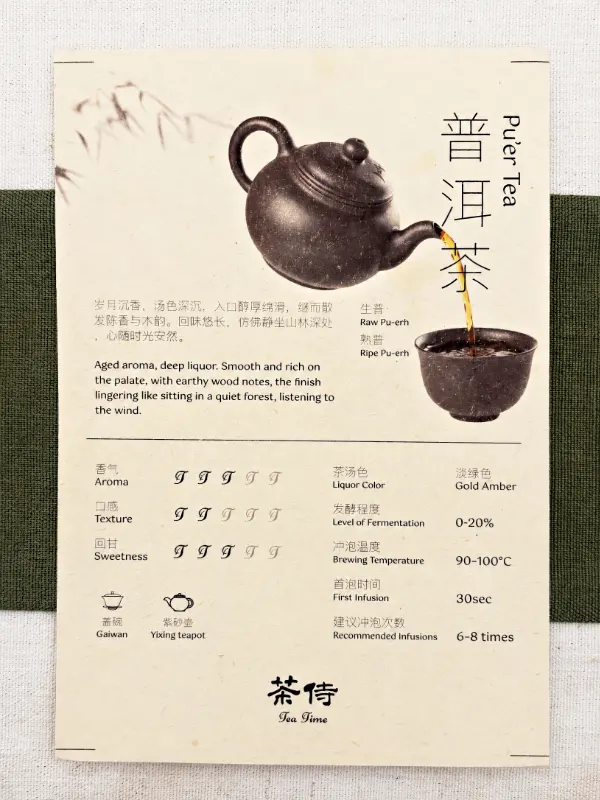
The teahouse is not designed around speed. Its teas are brewed more than once, each infusion revealing a slightly different character. Before guests begin, a member of the staff explains the preparation: the temperature of the water, the length of the brew and the technique appropriate to the leaves. A card provides further details about the tea and its particular qualities.
Tea Time was opened during the Covid pandemic by Ms Yaya, a Chinese expatriate who had identified what she considered a gap in Singapore’s hospitality landscape. Interest in Chinese tea was growing, she believed, but many consumers lacked both the knowledge and the opportunity to explore it.
Coffee remains the city’s more prominent preoccupation. But Tea is attracting curiosity, especially when it comes to Chinese tea.
A teahouse for residents, not only visitors
Although its location might suggest a business aimed primarily at tourists, the clientele tells a different story. According to Ms Yaya, approximately 60 percent of Tea Time’s guests are Singapore-based tea enthusiasts. The remainder is a mixture of European and Chinese residents and visitors.
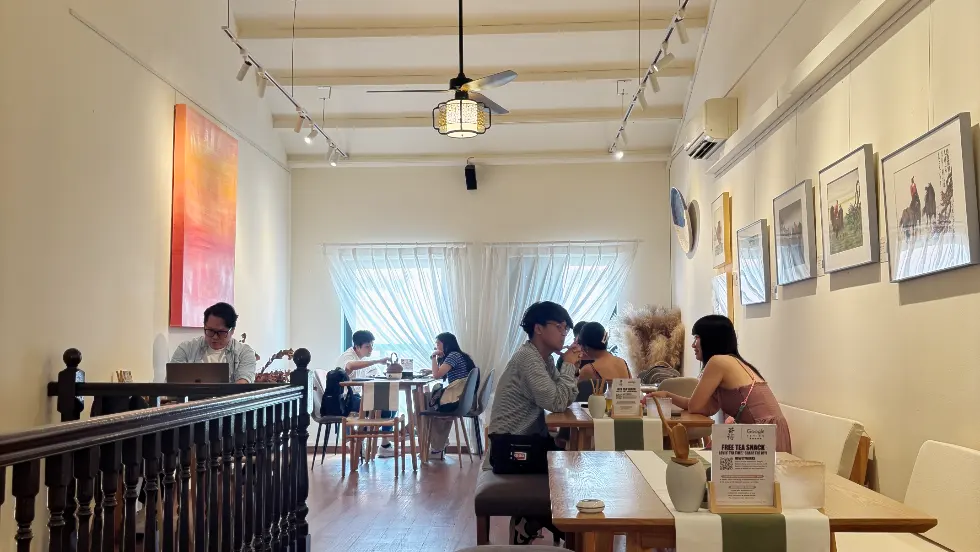
That balance is reflected in the atmosphere. The interior draws on Chinese culture without feeling like a theatrical reconstruction of it. Nothing appears to have been added simply to satisfy an outsider’s idea of what a Chinese teahouse should look like.
Instead, the space has the composed, personal quality of a place shaped over time by its owner.
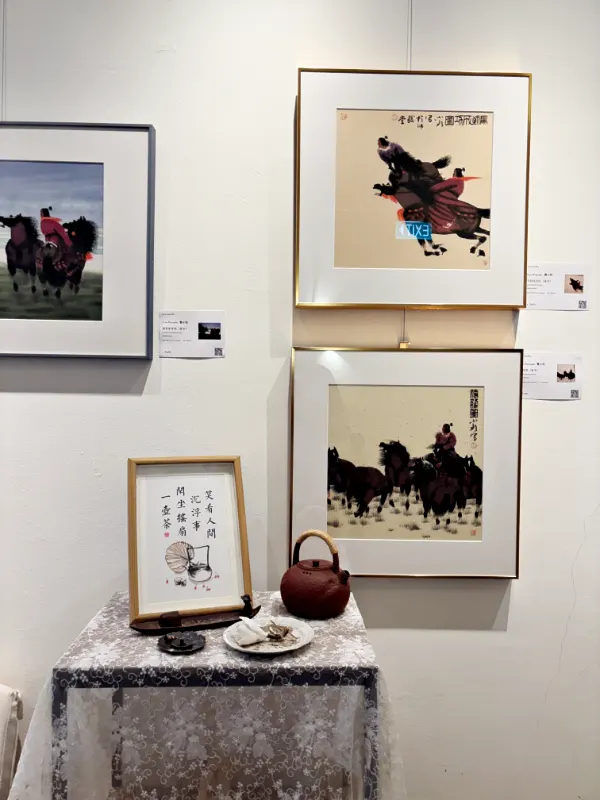
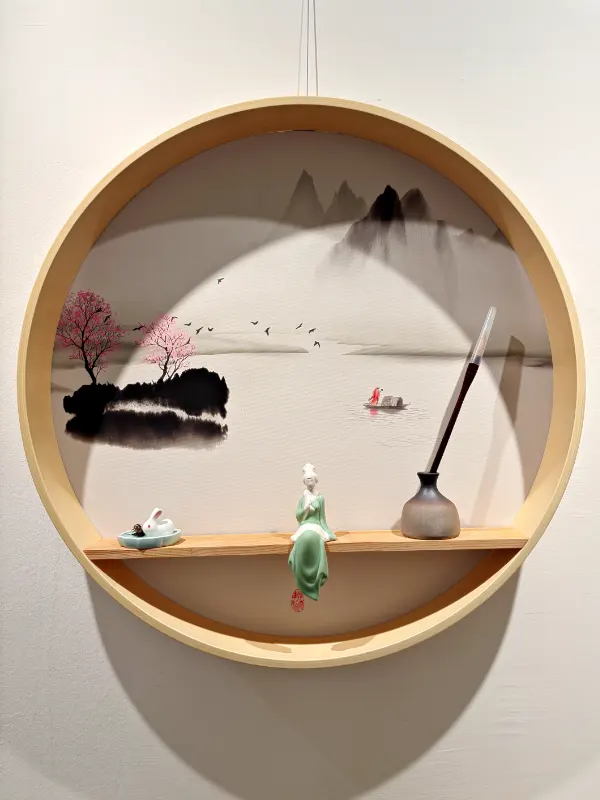
Chinese artworks line the walls. During our visit, the exhibition depicted a solitary warrior moving through natural landscapes—an appropriate figure for a room organised around stillness and contemplation.
Every detail has clearly been considered, yet the overall effect is unforced. Objects do not appear to have been positioned for a photograph. They seem to belong there.
For newcomers, the vocabulary of tea can be intimidating. Tea Time’s selection ranges from Pu-erh and oolong to white, green and scented teas. Cold brews offer a more contemporary point of entry.
The service helps make that variety intelligible. The staff does not merely carry tea to the table. It provides the context that allows the guest to appreciate it.
The tea is accompanied by Chinese sweets prepared by a chef with 40 years of experience. Their flavours and textures extend the tasting and establish a connection between the tea and a wider culinary tradition. Together, the pairings encourage guests to remain at the table longer than they might over an ordinary cup of coffee.
That duration is central to Tea Time’s identity.
The name describes both the product and the philosophy of the place. Tea requires time to infuse, time to change and time to be understood. The teahouse asks its visitors to surrender, at least temporarily, to that slower rhythm.
The presence behind the room
Tea Time is staffed entirely by women, a detail that feels less like a marketing statement than a natural extension of the establishment’s identity. The service is confident, attentive and gently instructive.
At the centre of it is Ms Yaya.
Her personality—strong, warm and understated—is present throughout the teahouse. It can be felt in the careful selection of teas, the considered artwork and the way knowledge is shared without ceremony or pretension. Her daughter works part-time at the teahouse.
In the middle of Chinatown, Ms Yaya has created a place where tea is neither a tourist performance nor an exclusive pursuit for connoisseurs. It is something to be explained, brewed and experienced.
Most of all, it is something for which time must be made.