Fabiola Ruggiero is an ITMA Country Trainer, hospitality tea advisor, author and founder of Cose di Tè. In this interview, she explains how a holistic approach to tea can help hotels build distinctive programmes that express their identity and enhance the guest experience.
T Hospitality. Your journey into the world of tea is quite unique. Can you tell us how it all began? Was there a particular moment, person or experience that made you fall in love with tea?
Fabiola Ruggiero. Like many people, I first fell in love with tea through the product itself. Nearly twenty years ago, that curiosity led to the creation of Cose di Tè and to countless journeys through tea-growing countries, meeting producers and discovering traditions that have been passed down for generations.
One of the greatest gifts of this journey has been the people. Over the years, I’ve met extraordinary producers, tea masters and professionals from around the world. Every encounter has shaped my understanding of tea and, in many ways, the person I have become.
Along the way, it became clear that tea was never just about what was in the cup. It was about culture and the relationships that naturally grow around a shared cup of tea.
Travelling, sharing tea and speaking at international events confirmed something I had already begun to understand: every culture has its own rituals, but hospitality speaks a universal language. That is the idea that continues to guide my work today: helping hospitality professionals see tea not simply as a beverage, but as a language of hospitality.
Many people discover tea as a beverage, but few choose to dedicate their careers to it. What convinced you that tea was the path you wanted to follow?
I never chose tea simply because I enjoyed drinking it. I chose it because I recognised its potential.
Few products can naturally bring together hospitality, gastronomy, culture and wellbeing. Tea moves effortlessly between fine dining, wellness, luxury hospitality and everyday rituals, adapting naturally to different contexts.
That versatility convinced me that tea wasn’t just a beverage. It was a discipline with enormous possibilities that had not yet been fully explored.
Today, your work spans education, consulting and tea culture. How would you describe your role within the tea industry, and what motivates you most about what you do?
I love creating connections through tea.
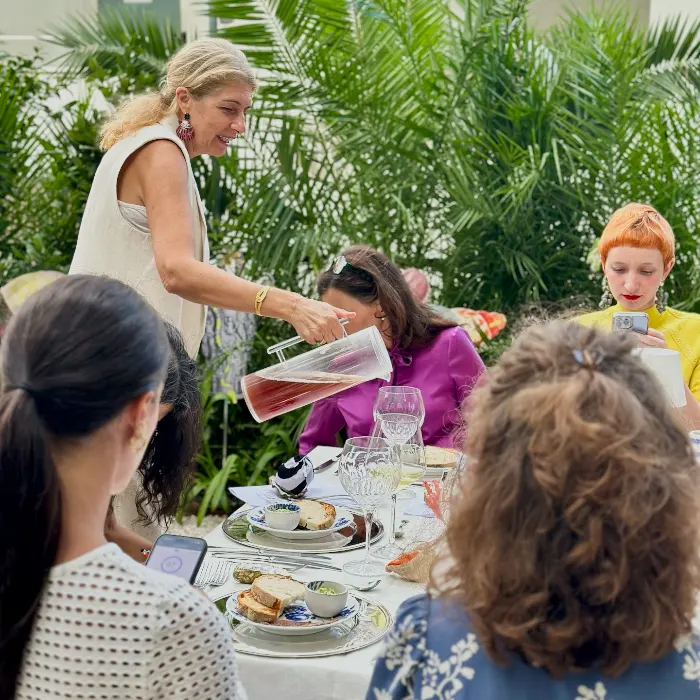
What fascinates me most is what happens when people gather around a shared cup. Tea slows the pace, makes conversations easier and invites people to listen more carefully. I’ve seen barriers disappear between colleagues, strangers become friends and teams discover new ways of communicating.
That’s why I believe hospitality is not a department. It is a mindset. Tea is one of the simplest and most natural ways to express it.
In your view, where should tea sit within a modern hospitality offering? How can hotels and restaurants transform it from a menu item into a meaningful part of the guest experience?
Tea should accompany the entire guest journey, not just the end of a meal.
It can welcome guests, accompany food pairings and enrich wellness experiences throughout their stay. Tea deserves the same attention to origin, service and pairing traditionally reserved for wine.
But tea can also become part of a hotel’s identity. Imagine welcoming guests with a signature tea created exclusively for that property. Just as some hotels are remembered for a signature scent or a signature cocktail, they could also be remembered for a signature tea.
Creating a signature blend is much like composing a fragrance. I don’t start with the ingredients; I start with the place. I try to understand its character, its atmosphere and what makes it unique. The tea becomes part of the hotel’s signature, something guests remember long after they have left, and can even take home with them, extending that memory beyond their stay.
You often speak about the importance of tea culture. Why is cultural understanding just as important as product knowledge when serving tea?
Because people rarely remember brewing temperatures. They remember why something matters.
Understanding tea means understanding the people, traditions and values behind every leaf. Product knowledge tells us how to prepare tea. Cultural knowledge explains why it has been prepared that way for generations.
The challenge isn’t better tea. It’s a broader vision.
What are the most common mistakes you see in the way tea is presented in hotels and restaurants today?
The biggest mistake is treating tea as an obligation instead of an opportunity.
Many hotels invest heavily in wine and coffee while tea receives very little strategic attention. A successful tea programme isn’t about offering more teas. It’s about making deliberate choices that reflect the hotel’s positioning.
Another common mistake is assuming that a famous tea brand automatically creates quality. Strong brands certainly have value, but they should never define a hotel’s identity. That identity should belong to the hotel itself.
The most memorable tea programme is not necessarily the one with the most famous brand. It’s the one that couldn’t exist anywhere else.
If you had the opportunity to redesign the tea programme of a luxury hotel from scratch, what would be your priorities?
I would start with people, not products.
Staff training comes first. Without knowledgeable and confident people, even the finest tea cannot express its full value.
Next, I would define the role tea should play within the hotel’s identity. Only then would I design the programme around that vision: food pairings, wellness rituals, signature teas and a carefully curated selection that reflects the character of the property.
Europe has seen significant changes in consumer attitudes towards tea over the past decade. What trends are shaping the market today, and how are hospitality operators responding?
Guests increasingly choose experiences that feel genuine rather than simply luxurious. They value authenticity, craftsmanship and thoughtful details over displays of excess. Across Europe, we are also seeing growing interest in tea itself, with new tea gardens emerging in regions where tea was once unimaginable.
This is where tea has an extraordinary opportunity. Most guests don’t expect to find an exceptional tea experience in a hotel, so they rarely ask for one. That doesn’t mean they don’t want it. It simply means no one has surprised them yet.
A remarkable stay deserves a remarkable cup of tea.
Training remains one of the industry’s greatest challenges. How important is staff education in creating memorable tea experiences, and what skills do you believe are most often missing?
A tea menu doesn’t create hospitality. People do.
That’s why training is essential. The greatest transformation doesn’t happen when people learn more about tea. It happens when they begin to see service differently. Confidence grows, conversations become more natural and hospitality becomes something they actively create rather than simply deliver.
I’ve seen the same shift happen in hotels and in team-building programmes alike. Tea is simply the medium. The real outcome is a different way of welcoming people.
Technical knowledge matters, but curiosity, empathy and genuine attention to people are what guests remember.
Looking ahead, what changes would you like to see within the tea industry over the next few years?
I would like to see the tea industry become more collaborative.
Over the past years, quality has improved enormously. The next challenge is no longer producing better tea, but helping more people understand its cultural, sensory and economic value.
That requires producers, educators, researchers and hospitality professionals to work together rather than in parallel. Tea has enormous potential, but only if we start building a stronger ecosystem around it.
Finally, how do you imagine the future of tea in hospitality? Are you optimistic that tea will eventually occupy the place it deserves alongside wine, coffee and other premium beverages?
Yes, I’m optimistic, but only if we stop comparing tea to other beverages.
Tea doesn’t need to become the new wine or coffee. It simply deserves the same respect.
Respect begins by approaching tea with the same care, curiosity and professionalism already reserved for other premium beverages.
The future belongs to those who recognise that tea is not an alternative to wine or coffee, but an exceptional category in its own right.
On a personal note, if you could introduce every hospitality professional to just one tea experience, what would it be—and why?
I would invite them to experience a traditional Japanese Tea Ceremony.
Not because I believe every hotel should reproduce it, but because it teaches one of hospitality’s most valuable lessons: the importance of being fully present. Before a single cup is served, attention, care and intention are already shaping the guest’s experience.
The Japanese concept of ichigo ichie reminds us that every encounter happens only once. Hospitality is built in those unrepeatable moments, when people feel genuinely seen and welcomed.
In the end people don’t return simply for tea. They return for how we made them feel.