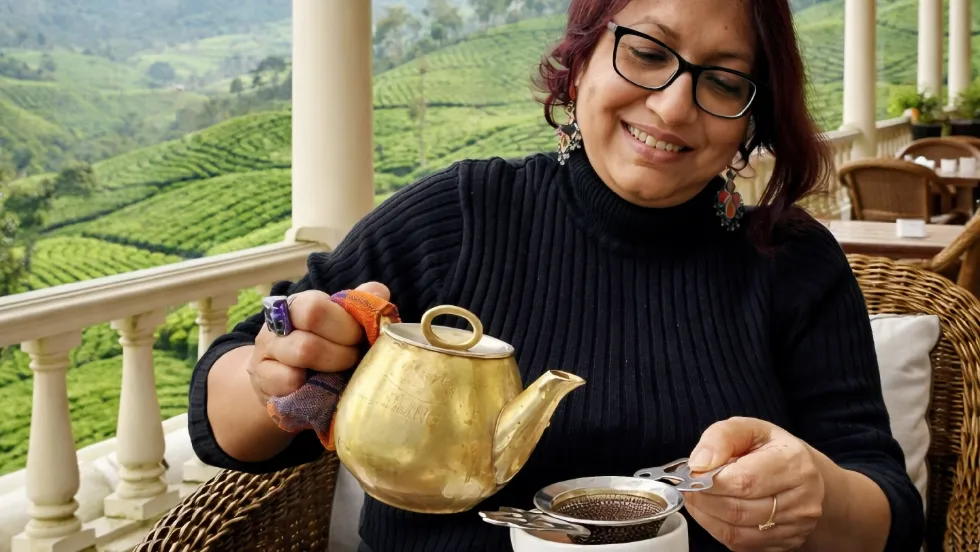
A conversation with Inga Garmuvienė, Founder & Managing Director of MB Kenya Tea
Kenya is one of the world’s leading tea producers, yet much of its tea reaches consumers without its origin being fully recognized. Based in Lithuania, MB Kenya Tea is working to change that by connecting Kenyan producers with buyers who value consistency, transparency and long-term relationships.
In this conversation with T Hospitality, founder and managing director Inga Garmuvienė discusses what distinguishes Kenyan tea, the role hospitality can play in showcasing its qualities, and why reliable partnerships are just as important as the tea itself.
T Hospitality: Kenya is one of the world’s largest tea producers, yet consumers often recognise the brands rather than the origin. What inspired you to build a company dedicated specifically to Kenyan tea?
Inga Garmuvienė. When I first became involved in the Kenyan tea industry, I was surprised by how much Kenyan tea is consumed worldwide without Kenya being visible on the pack. That raised a simple question: why should such an important origin remain largely unseen? MB Kenya Tea grew from the idea of connecting Kenyan tea supply with international buyers through a reliable European company. The opportunity came through our Kenya-side relationships, but the purpose quickly became larger than selling tea. We want Kenyan tea to receive stronger recognition under its own name, while buyers know they have a partner who communicates clearly, keeps commitments and thinks long term.
TH When people compare teas from Kenya, Sri Lanka, India or China, what do you believe makes Kenyan tea truly distinctive?
IG. Every origin has its own character, so I would never claim that one country produces the single best tea. What stands out about Kenya is its combination of brightness, strength and consistency. Kenyan tea brings colour, body and liveliness to a cup, which is why it performs so well in blends. High- altitude growing areas, fertile soils and year-round production also support dependable supply. At the same time, Kenya is more versatile than many people realise: it produces bold CTC teas as well as refined orthodox and speciality teas. The world already drinks Kenyan tea; the next step is helping more people recognise it by name.
TH: Kenya has traditionally been associated with high-quality CTC black tea. How is the industry evolving today, particularly in orthodox, speciality and premium teas?
IG. CTC remains a major strength of Kenya and has earned its reputation through decades of consistent production. The exciting development is that the sector is becoming more diverse. Producers are investing in orthodox, speciality and premium teas as buyers become more interested in origin, flavour and processing. I do not see this as Kenya moving away from CTC. I see it as Kenya expanding its offer while protecting the reliability for which it is already respected. At MB Kenya Tea, premium CTC remains central to our work, but we also want buyers to discover the broader range and character of Kenyan tea.
TH. Hospitality is becoming an increasingly important channel for premium tea. What solutions do you offer hotels, restaurants and cafes that go beyond simply supplying tea?
IG. Hospitality is about experience, not only product. Tea can create a moment, support a story and give guests something memorable. Our first responsibility is to listen: one client may need a dependable CTC grade for volume service, while another may want orthodox or single-origin teas for a premium concept. As MB Kenya Tea grows, we aim to support tailored sourcing, private-label opportunities and clearer storytelling around Kenyan origin. Customers rarely remember only the lowest price. They remember who understood the brief, solved problems and remained dependable when circumstances became difficult.
TH: What qualities do leading hotels look for today when selecting a tea partner? Is price still the main factor, or are provenance, sustainability and storytelling becoming equally important?
IG. Price matters, but it is rarely enough to create a long-term partnership. Hotels also need consistency, responsiveness and confidence that a supplier will deliver what was promised. Guests are increasingly interested in origin, authenticity and the people behind the product, so provenance and storytelling are becoming commercially relevant as well. A cup of Kenyan tea represents growers, factory teams and a long chain of expertise. Suppliers should help hospitality businesses communicate that value honestly. For me, the best partnerships are those in which both sides work towards the same objective rather than simply negotiate the next order.
TH: Europe has long been one of the key markets for Kenyan tea. How do you see demand evolving over the next five years?
IG. European consumers are reading labels more carefully and asking more questions about origin, quality and production. That creates an opportunity for Kenyan tea to be recognised not only as an ingredient in a blend, but as an origin with its own identity. Buyers are also placing greater value on dependable suppliers because recent years have shown how vulnerable international supply chains can be. I expect demand to become more segmented: strong, consistent CTC teas will remain important, while interest in premium, speciality and single-origin products will continue to grow. Companies that combine good tea with transparent communication will be best positioned.
TH: s there any particular reason why you established your company in Lithuania? Does the country have a special connection with Kenya? Please tell us about this choice.
IG. Lithuania is my home and the place where I built my career and business experience, so establishing the company here felt natural. There may not be a historic tea connection between Lithuania and
Kenya, but business is ultimately built by people who share values and a vision. MB Kenya Tea allows us to combine a European business base with strong Kenya-side relationships. I see the company as a bridge between Kenyan tea supply and international buyers seeking reliability, clarity and long-term cooperation. Lithuania is home, Kenya gave us the opportunity, and MB Kenya Tea is where those two stories meet.
TH: The conflict in the Gulf has disrupted global shipping routes and increased freight costs. How has this affected your logistics, exports and relationships with international buyers?
IG. Shipping disruption and higher freight costs require earlier planning and much closer communication. We work with logistics partners in Kenya and internationally, monitor developments and give buyers realistic expectations rather than promises that may not be kept. Customers generally understand challenges; what damages trust is an unexpected surprise. Difficult periods reveal the true value of a supplier. Professionalism is not the ability to avoid every problem, because that is impossible. It is the ability to face problems honestly, explain the position clearly and work with the customer towards a practical solution.
TH: The Gulf is one of the world’s most dynamic hospitality markets, yet Kenya remains relatively underrepresented as a premium origin. Is the Middle East a strategic market for your company?
IG. Absolutely. Tea is deeply connected with hospitality, respect and social life across the Gulf, which makes the region a natural strategic market for us. Kenyan tea is already familiar to many buyers through blends, but we would like Kenya to gain stronger recognition as a premium origin in its own right. The region values quality, authenticity and products with a genuine story. We want to build lasting relationships with importers, distributors and hospitality businesses, not approach the Gulf as simply another sales destination. Listening comes before selling, and respect comes before partnership.
TH: What opportunities do you see in the GCC, and what would it take for Kenyan tea to gain greater visibility among hotels, cafes and fine dining restaurants?
IG. The opportunity is already there because the GCC has a strong tea culture and some of the world’s most ambitious hospitality businesses. Greater visibility will come through tasting, education and collaboration, not through price alone. Buyers, chefs and beverage teams need to experience the range of Kenyan tea and understand the origin behind it. Once the product has a story, it becomes more than another menu item. Producers, exporters, distributors and hospitality operators all have a role. If guests in Dubai, Doha, Riyadh or Abu Dhabi begin asking specifically for Kenyan tea, that will be an achievement for the entire Kenyan tea industry.
TH: Looking ahead, what are the biggest opportunities – and the biggest challenges – for Kenyan tea on the global stage?
IG. The greatest opportunity is for Kenyan tea to be recognised for what it already contributes to the world. Consumers increasingly value authenticity, which gives Kenya the chance to tell its story more confidently. The challenges are growing competition, changing expectations, complex logistics and pressure on price. Excellent tea alone is no longer enough; the industry also needs strong partnerships, reliable execution and clear communication. Technology makes international contact easier, but trust is still built one conversation at a time. The companies that remember this will create the strongest reputations.
TH: Finally, if you could change one perception that international buyers have about Kenyan tea, what would it be?
IG. I would ask buyers to see Kenyan tea as more than a dependable ingredient for blends. Behind every shipment are growers, factory teams, exporters and logistics professionals whose knowledge and work make the final cup possible. Kenya offers consistency and scale, but it also offers origin, character and people with deep expertise. MB Kenya Tea is still at the beginning of its journey, and that keeps us attentive: every day is an opportunity to listen, improve and earn trust. We want to be known not simply as another exporter, but as a company that keeps its word and is genuinely good to work with.